- General Chairs -
|
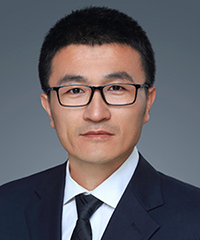
Yufei Ma |
Yufei Ma Prof. Yufei Ma is a Professor and Doctoral Supervisor at Harbin Institute of Technology, China. He is an Optica Fellow, a recipient of the National Excellent Young Scientists Fund, and a recipient of the first batch of the Heilongjiang Provincial Excellent Young Scientists Fund. He was also selected for the Harbin Institute of Technology Young Top-Talent Program and serves as the academic leader of the HIT Young Scientist Studio. His research focuses on laser sensing, laser spectroscopy, and solid-state laser technologies. Prof. Ma was named an Elsevier Highly Cited Chinese Researcher in 2021, 2022, and 2023. He currently serves as a Section Editor of Photoacoustics, an Associate Editor of Optics Express, a Topical Editor of Optics Letters, and holds editorial positions for several other international journals, including Opto-Electronic Advances, Chinese Optics Letters, and Optical Engineering. He has published hundreds of peer-reviewed papers as first or corresponding author in leading journals including Light: Science & Applications, Advanced Photonics, PhotoniX, Laser & Photonics Reviews, Opto-Electronic Science, Applied Physics Reviews, and Photonics Research. He has led multiple national and provincial research projects and has received several academic honors, including recognition in the 2024 Light10 list, the Second Prize of the Natural Science Award of the Chinese Society for Optical Engineering, the Ministry of Education Academic Newcomer Award, and the Optica Incubic/Milton Chang Travel Grant. |
|
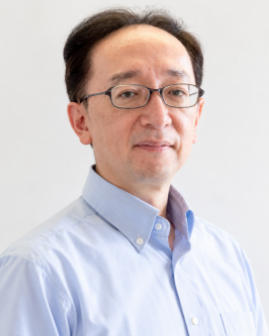
Tomoyoshi Shimobaba |
Tomoyoshi Shimobaba Tomoyoshi Shimobaba is a Professor at the Graduate School of Engineering, Chiba University, Japan. His research focuses on computational and digital holography, three-dimensional imaging and display, phase retrieval, high-speed hologram computation, and optical information processing. His recent work also explores deep learning, optical neural networks, and computational imaging. He is the Member of IEEE, SPIE, and Optica. He serves as a Topical Editor of Optics Letters, an Editor of Scientific Reports, and an Associate Editor of Frontiers in Photonics and IET Image Processing. He has also served on program committees of international optics and photonics conferences. His honors include the Japan Society for the Promotion of Science Prize in 2019 and the Minister of Education, Culture, Sports, Science and Technology Award for Science and Technology in 2021. |
|
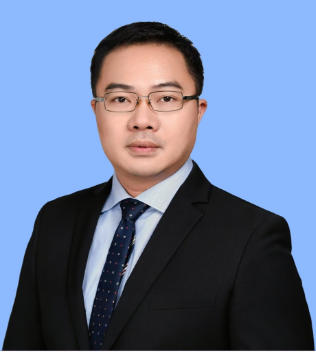
Hongyan Fu |
Hongyan Fu Prof. Hongyan Fu is a tenured Associate Professor at Tsinghua Shenzhen International Graduate School, Tsinghua University, China. He is an Optica Fellow (2026), an IEEE Senior Member, and an SPIE Life Member. His research focuses on integrated photonics, optical communications, optical sensing, LiDAR, and silicon photonics, with an emphasis on developing advanced photonic technologies for next-generation communication and sensing systems. Previously, he served as Project Manager of the All-Optical Networks (AON) initiative at Huawei Central Research Institute, which subsequently evolved into a company-wide flagship research program dedicated to next-generation optical communication technologies. Prof. Fu has authored or co-authored over 400 journal and conference papers, contributed three book chapters, and holds more than 80 granted or pending patents across China, Europe, Japan, and the United States, reflecting his substantial contributions to photonic research and technological innovation. He serves as an Associate Editor of Frontiers in Photonics and has reviewed manuscripts for leading journals, including Nature and Science. He has also served as Technical Program Co-Chair of the Asia Communications and Photonics Conference (ACP 2022) and Co-Chair of the International Nano-Optoelectronics Workshop (iNOW 2019). |
- Program Chairs -
|
Ahmed A. Kishk |
Ahmed A. Kishk Ahmed A. Kishk is a Professor at Concordia University, Montreal, Canada. He has recently worked on millimeter-wave antennas for 5G/6G applications, analog beamforming networks, electromagnetic bandgap structures, artificial magnetic conductors, soft and hard surfaces, phased array antennas, reflectarrays/transmitarrays, and wearable antennas. In addition, he is a pioneer in dielectric resonator antennas, microstrip antennas, small antennas, microwave sensors, RFID antennas for readers and tags, multi-function antennas, microwave circuits, and feeds for parabolic reflectors. He has published 964 peer-reviewed academic documents, which have accumulated 20,945 citations from 14,459 scholarly publications with an h-index of 72, reflecting his outstanding international academic influence in electromagnetics and photonics. |
|
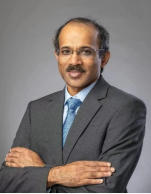
Arup Neogi |
Arup Neogi Arup Neogi (Optica Fellow) is a Professor at the Institute of Fundamental and Frontier Sciences, University of Electronic Science and Technology of China (UESTC), where he leads the Ultrafast Nanophotonics and Optically-Inspired Quantum Acoustics group. His research focuses on ultrasonic and optical techniques for material evaluation, acoustic metamaterials, nano-plasmonics, and plasmonic metasystems for fluidics and photonically-driven robotic applications. A Fellow of Optica (Optical Society of America) and 2024 Chinese Government Friendship Award recipient, he was previously a Distinguished Professor at the University of North Texas (2002-2021), leading the NSF-EFRI program on nonreciprocal acoustics and diagnostic facilities for adaptive additive manufacturing. He has also been an Invitation Professor of the Japan Society for Promotion of Sciences, a Lady Davis Professor at Hebrew University, and a Senior Associate of the National Academy of Sciences (US). He also leads a program on Acoustic metamaterials for controlling acoustic wave-matter interaction for non-invasive biomedical imaging. |
|
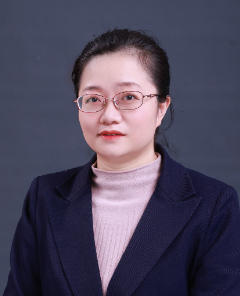
Xianye Ben |
Xianye Ben Prof. Xianye Ben is a Professor and Ph.D. Supervisor at Shandong University, China. She is an IEEE Senior Member and a researcher in signal and information processing. Her research interests include image processing, pattern recognition, multimedia content analysis, affective computing, natural language processing, artificial intelligence, and data mining. She has published extensively in leading international journals and conferences, including IEEE Transactions on Pattern Analysis and Machine Intelligence, IEEE Transactions on Image Processing, IEEE Transactions on Circuits and Systems for Video Technology, IEEE Transactions on Multimedia, Pattern Recognition, and CVPR. Her research focuses on developing intelligent methods for image understanding, multimedia analysis, and pattern recognition, with an emphasis on artificial intelligence and data-driven computational approaches. Prof. Ben has received several competitive research honors and awards and has served as a reviewer, committee member, and chair for international academic conferences and professional activities. Her interdisciplinary research in intelligent image processing and AI provides strong connections to computational imaging, intelligent image analysis, and computational methods in optical imaging. |
- Publication Chairs -
|
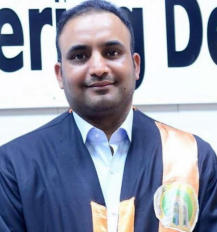
Haider Th. Salim Al-Rikabi |
Haider Th. Salim Al-Rikabi Prof. Dr. Haider Th. Salim Al-Rikabi is a faculty member in the Department of Electrical Engineering, College of Engineering, Wasit University, Iraq. His research interests include wireless communications, mobile communication systems, control systems, intelligent technologies, smart cities, and the Internet of Things (IoT). He has published 119 peer-reviewed academic documents, which have accumulated 3,020 citations from 1,461 scholarly publications, with an h-index of 37. He has developed IoT-driven thermal imaging systems for smart city governance, proposed hybrid multimodal medical image fusion algorithms, and explored intelligent optimization frameworks for imaging reconstruction. His studies integrate intelligent control and IoT transmission technologies to enhance the real-time performance of optical sensing systems, covering core directions including intelligent optical computing, biomedical optical imaging and urban optical sensing applications. |
|
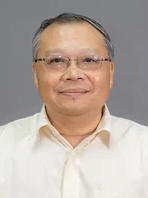
Sheng-Yuan Chu |
Sheng-Yuan Chu Prof. Sheng-Yuan Chu is a Distinguished Professor in the Department of Electrical Engineering at National Cheng Kung University. He is an IEEE Senior Member (2019), a Fellow of the International Association of Advanced Materials (2023), and a Fellow of the Institution of Engineering and Technology (2024). His research primarily focuses on advanced optoelectronic materials and devices, including display technologies, photodetectors, and optical sensing. His work integrates materials science, optoelectronics, and device engineering, contributing to the development of next-generation optical and electronic technologies. Prof. Chu has published extensively in international scientific journals, making significant contributions to optoelectronic materials, functional thin films, and advanced device technologies. His research achievements have received international recognition, including the Future Tech Breakthrough Awards in 2019 and 2021 and the Scientist Award from the International Association of Advanced Materials in 2020. These distinctions reflect his sustained contributions to scientific research and technological innovation. Beyond his research accomplishments, Prof. Chu has received teaching honors from National Cheng Kung University and has actively contributed to graduate education, interdisciplinary collaboration, and the advancement of optoelectronic technologies. |
- Program Committee -
| Reviewer | Affiliation | Country |
| Prof. Lei Shi | Fudan University | China |
| Prof. Chulmin Joo | Yonsei University | South Korea |
| Prof. Zhi Lu | Tsinghua University | China |
| Prof. M.Sasani Ghamsari | Iranian Nuclear Science and Technology Research Institute | Iran |
| Prof. Addisson Salazasr | Universitat Politècnica de València | Spain |
| Dr. Jielu Yan | Chongqing University | China |
| Dr. Davide Moroni | Institute of Information Science and Technologies | Italy |
| Prof. Yanfei Wang | Institute of Geology and Geophysics, Chinese Academy of Sciences | China |
| Prof. Shiji Song | Tsinghua University | China |
| Prof. Sen Xu | Yancheng Institute of Technology | China |
| Prof. Sundararajan Natarajan | Indian Institute of Technology Madras | India |
| Prof. Mutaz Mohammad | Zayed University | United Arab Emirates |
| Assoc. Prof. Ashish Yadav | Shandong University of Technology | China |
| Prof. Fulufhelo Nemavhola | Durban University of Technology | South Africa |
| Prof. Changjun Min | Shenzhen University | China |
| Dr. Hong Liu | A-Star, Institute of Materials Research and Engineering | Singapore |
| Assoc. Prof. Xun Chen | Beihang University | China |
| Assoc. Prof. Shiva Prasad Kollur | Amrita Vishwa Vidyapeetham | India |
| Prof. Inkyu Moon | Daegu Gyeongbuk Institute of Science and Technology | South Korea |
| Dr. Wenjie Liu | University of Oxford | United Kingdom |
| Assist. Prof. Myeongsu Seong | Xi'an Jiaotong-Liverpool University | China |
| Dr. Liang Zhou | Xi'an Institute of Optics and Precision Mechanics, CAS | China |
| Prof. Tianwen Zhang | Southwest Jiaotong University | China |
| Prof. Huanjun Chen | Sun Yat-sen University | China |
| Prof. Ali Mohammad-Djafari | International Science Consulting & Training (ISCT) | France |
| Prof. Zhiwei Guo | Tongji University | China |
| Prof. Zhou Junhe | Tongji University | China |
| Dr. Rubén Ramos-García | Instituto Nacional de Astrofísica, Óptica y Electrónica | Mexico |
| Prof. Nitish Kumar Gupta | Birla Institute of Technology and Science, Pilani | India |